
Yamuna Expressway Accident Data: Is It Really a Killer Road? The Truth in Numbers
03 October 2026 · Rise Propworld Team
Every few months a Yamuna Expressway accident goes viral and someone calls it a killer road. We read the RTI data, the safety audits and the fog rules. Here is what the numbers actually say, and what it means if you plan to live along it.
"Killer road." "Death trap." "Don't drive there at night." If you have spent five minutes in a Greater Noida WhatsApp group, you have seen a Yamuna Expressway accident video with one of these captions.
We work along this road every single week, from Pari Chowk to Jewar, Mathura and Agra. So we did what a forward never does. We went to the data. This is a myth vs fact look at Yamuna Expressway accident numbers, using RTI figures, a national road research audit and the winter fog rules. The answer is not "it is perfectly safe", and it is not "it is a death trap" either.
First, the basic numbers
The Yamuna Expressway is 165.537 km long, six lanes wide and opened on 9 August 2012, running from Pari Chowk in Greater Noida to Kuberpur near Agra, according to Wikipedia. The standard speed limit is 100 km/h for cars and 60 km/h for heavy vehicles.
Two RTI replies obtained by Supreme Court lawyer KC Jain give us the long view:
| Period | Accidents | Deaths | Injuries | Reported by |
|---|---|---|---|---|
| August 2012 to 31 March 2018 | 4,956 | 718 | 7,671 serious injuries | Gulf News (2019) |
| 2012 to 2023 | 7,625 | 1,320 | 11,168 | Open magazine (December 2025) |
These are serious numbers. Every one of those 1,320 deaths was a family. Now let us test the five things people usually say.
Myth 1: "Most Yamuna Expressway accidents happen because of over-speeding"
Fact: fatigue is the bigger killer.
Open magazine's analysis of the RTI data found that drowsy driving was linked to 3,364 accidents and 522 deaths between 2012 and 2023. That is about 44% of all crashes. Speed related crashes made up about 23%.
The earlier RTI data told a similar story. Gulf News reported that over-speeding caused 23.42% of accidents up to March 2018, with tyre bursts behind about 12%.
Open called it "highway hypnosis": a long, straight, monotonous road that slowly puts a tired driver to sleep. Speed makes a crash worse. Sleep is often what starts it.
Myth 2: "It gets worse every year"
Fact: the annual death count in the RTI series has come down, but it has not gone away.
Do the simple arithmetic with the two RTI figures. The first period, August 2012 to March 2018, recorded 718 deaths over roughly five years and seven months. That works out to about 128 deaths a year.
Subtract that from the 1,320 deaths recorded up to 2023, and you get about 602 deaths over the next five years and nine months, or roughly 105 a year. Open magazine's own estimate for 2023 alone is about 91 deaths.
Two caveats. These are two different RTI replies, so treat our subtraction as a rough indicator, not an official trend line. And fewer deaths per year is still far too many. Big crashes still happen: News On AIR reported that a multi vehicle collision in the Baldev area of Mathura on 16 December 2025 killed at least 13 people and injured more than 70.
Myth 3: "Fog crashes are just bad luck"
Fact: fog is predictable, and the rules now change for it.
Open magazine describes winter fog with near zero visibility as a key cause of pile ups. The response has been a seasonal speed cut. The Daily Guardian reported in December 2025 that from 15 December, the limit for light vehicles on both the Yamuna Expressway and the Noida Greater Noida Expressway would drop from 100 km/h to 75 km/h for about two months, while heavy vehicles stay at 60 km/h on the Yamuna Expressway. The same report said nearly 59,000 speeding citations were issued between January and October 2025.
So fog is not luck. It is a known winter risk with a known rule. The drivers who get hurt are often the ones who ignore it.
Myth 4: "Cameras everywhere means everyone gets caught"
Fact: cameras record a lot, but recording is not the same as stopping.
Open magazine notes CCTV cameras roughly every 5 km and speed monitoring, with about 2.33 crore over-speeding cases recorded in the early years. Gulf News quoted activists in 2019 saying violators were often not booked.
Open also cited a CSIR CRRI audit finding that about 23% of fatal crashes involved impact with the median, and flagged damaged or poorly installed guardrails. Its recommendations included rest stops every 50 km, fatigue monitoring in commercial vehicles, variable speed limits in fog, rumble strips and better crash barriers. Some of these are still pending. That is a fair criticism, and residents should keep asking for them.
Myth 5: "If I live on the Yamuna Expressway, I am at risk every day"
Fact: the risk depends on how you use the road.
This is our reading of the data, not an official finding. The biggest factor in the RTI numbers is fatigue, and fatigue builds over long, monotonous drives. A resident in the Greater Noida end sectors usually drives a short section of this 165 km road on a daily commute, often in daylight and wide awake. That is a very different exposure from an overnight run to Agra after a full working day.
It does not make the commute risk free. Speed, fog and lane discipline matter on every kilometre. But "I will be in danger every day" is not what the pattern in the data suggests.
What we tell our own clients
- Never drive the long stretch tired. If you are heading to Mathura or Agra after work, stop, rest and swap drivers. The 44% figure is the reason.
- Respect the fog limit. In December and January, 75 km/h is the law for cars. Many mornings even that is too fast.
- Check your tyres. Tyre bursts showed up in the early RTI data at about 12% of accidents. Long, hot, high speed runs punish worn tyres.
- Use the left lanes for cruising. Most median crashes start in the fast lane.
- Visit sites in daylight first. Drive the route you will actually commute, at the time you will actually commute.
For toll costs, exits and a day trip plan, read our guide on Greater Noida to Agra by road.
So, is the Yamuna Expressway safe to live along?
Here is our honest verdict. The Yamuna Expressway has a serious accident record, and anyone who tells you otherwise is selling. But the data does not show a road where every trip is a gamble. It shows a road where fatigue, fog and speed cause most of the damage, where the yearly toll in the RTI series has come down from its early years, and where some safety fixes are still overdue.
If you are comparing locations, our Sector 150 Noida vs Sector 22D comparison puts the expressway side next to the Noida side. For new road links that will take load off this corridor, see the new highways redrawing the Greater Noida map. And for another viral claim we checked against the facts, read Is Greater Noida falling apart?
Projects we list at the Greater Noida end of the corridor include Eldeco Echoes of Eden in Sector 22D, about 17 km from the airport per its project page, and Hero Homes Sector MU, at the junction of the FNG, Noida Greater Noida and Yamuna expressways.
Frequently asked questions
How many accidents have happened on the Yamuna Expressway?
RTI data reported by Open magazine shows 7,625 accidents, 1,320 deaths and 11,168 injuries between 2012 and 2023.
What is the main cause of Yamuna Expressway accidents?
Driver fatigue. Open magazine's analysis of RTI data links drowsy driving to about 44% of crashes. Speed related crashes account for about 23%.
What is the Yamuna Expressway speed limit?
The standard limit is 100 km/h for cars and 60 km/h for heavy vehicles. In winter fog, the car limit has been reduced to 75 km/h from mid December for about two months, as reported in December 2025.
Is the Yamuna Expressway getting safer?
The RTI figures suggest fewer deaths per year than in its early years, with Open magazine estimating about 91 deaths in 2023. Serious crashes still occur, and several recommended safety measures are still pending.
Want to see the corridor with someone who drives it every week?
We take buyers along the Yamuna Expressway in daylight, show the actual commute, and give straight answers on every project we visit.
Book a Yamuna Expressway site visit on WhatsApp: +91 9540400407
Sources: Open magazine, "Why the Yamuna Expressway Keeps Turning Deadly, and What the Data Reveals" (17 December 2025); Gulf News, "Killer road in India: 4,956 accidents, 718 deaths on Yamuna Expressway in 5 years" (2019); The Daily Guardian, "Fog Alert: Lower Speed Limits on Yamuna, Noida Expressways from December 15" (December 2025); News On AIR, report on the Mathura accident (16 December 2025); Wikipedia, Yamuna Expressway; Rise PropWorld project pages for Eldeco Echoes of Eden and Hero Homes Sector MU.
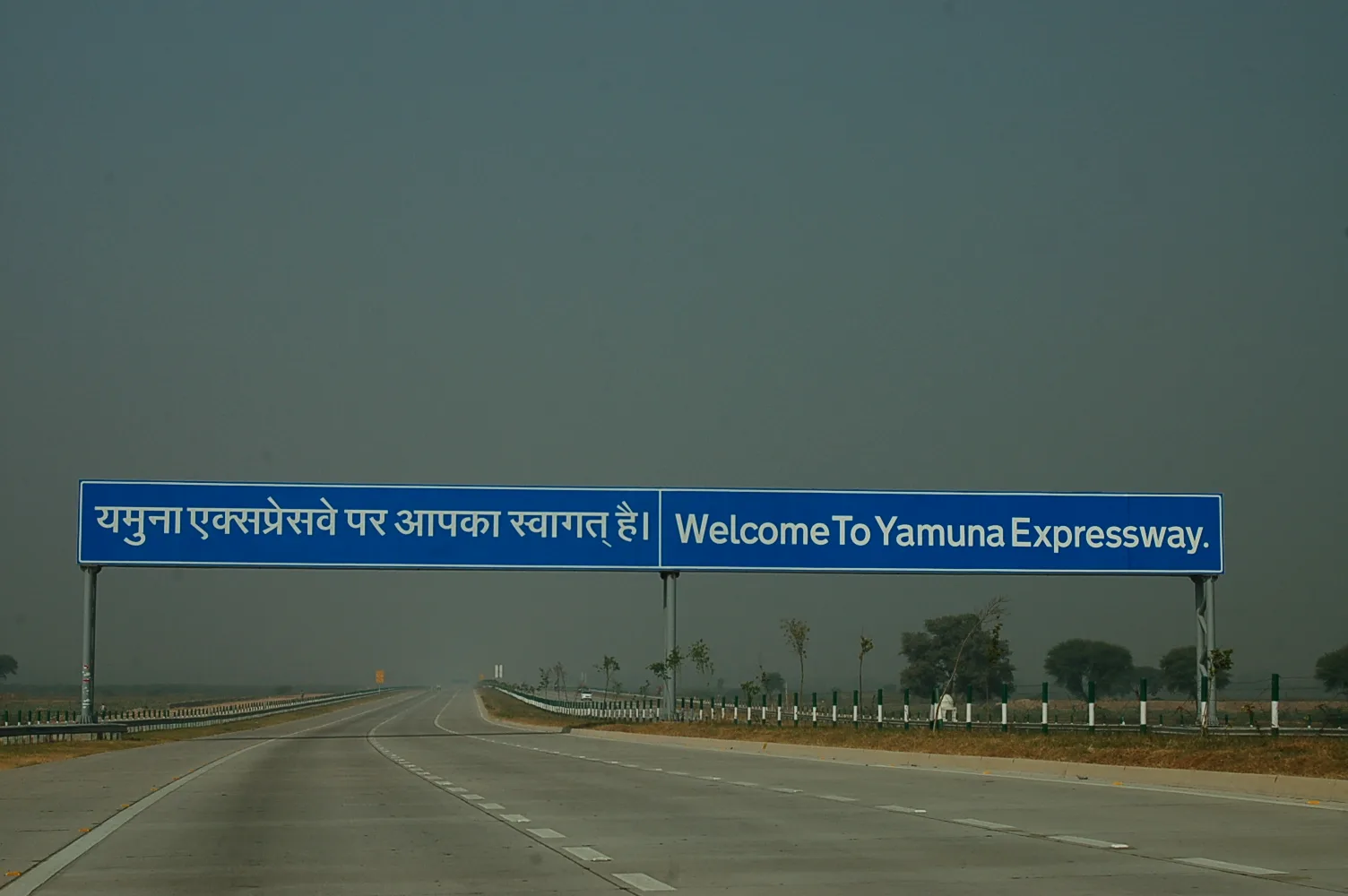
Cover image: Yamuna Expressway, India, 2012, by Ian Brown, licensed CC BY 2.0, via Wikimedia Commons.